

Enaerios, Limassol: How a Seaside Pier Connected to One of Europe’s Largest Asbestos Mines
What does a seaside walk in Limassol have to do with an asbestos mine high in the Troodos Mountains?
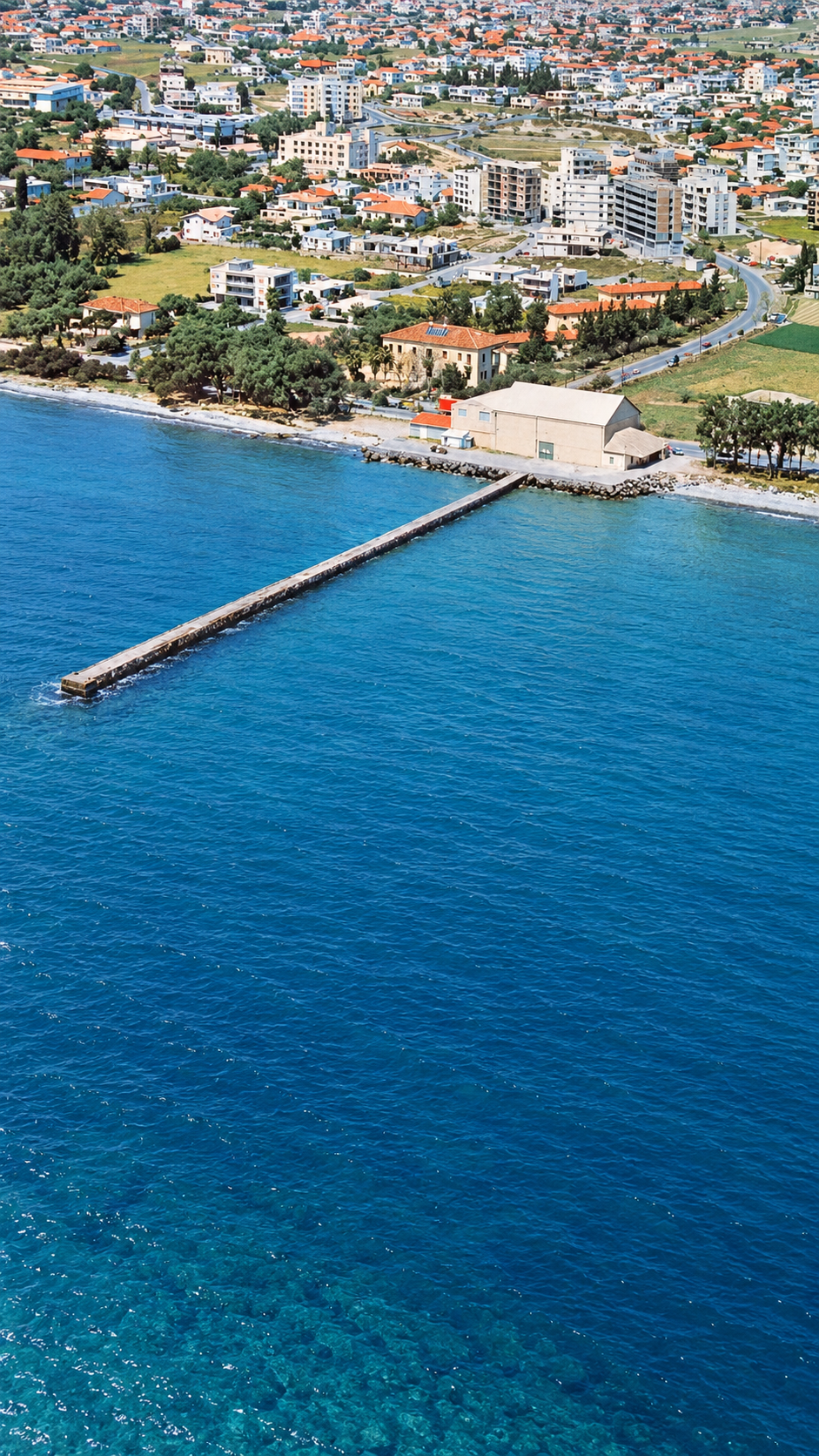
The answer is Enaerios. This part of {Limassol Center}’s seafront was once the coastal endpoint of an aerial cableway carrying asbestos from Amiantos to the sea for export. The mine was one of Europe’s largest, and the transport system left a lasting mark on the city: the name Enaerios itself.
What does Enaerios mean?
Enaerios comes from the Greek word «εναέριος», meaning “aerial” or, more simply, “in the air”. The name refers to the suspended wagons that once brought asbestos down from the mountains.
It is a small piece of industrial history hidden in an everyday place name. Long after the cableway disappeared, Limassol kept the name.
The story begins at Amiantos in 1904
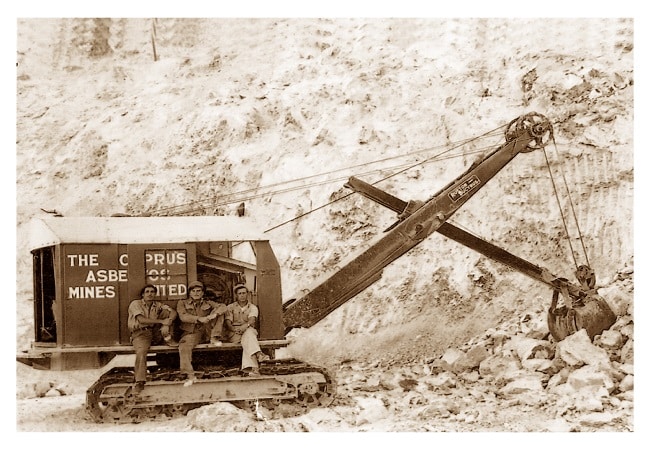
Organised asbestos mining at Amiantos began in 1904. High in the Troodos Mountains, the operation grew into a major part of Cyprus’s mining industry.
But extracting the material was only part of the challenge. It also had to reach the coast. With limited roads and transport options, moving it through the mountain countryside was difficult and expensive. An aerial cableway provided a way to connect the mine with Limassol’s seafront.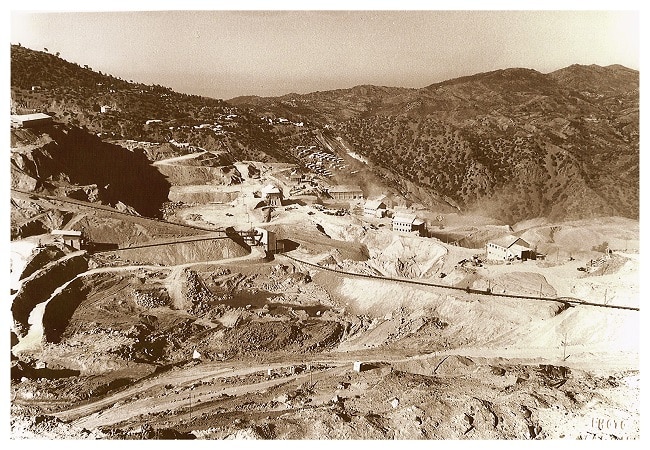
A journey of roughly 35 kilometres through the air
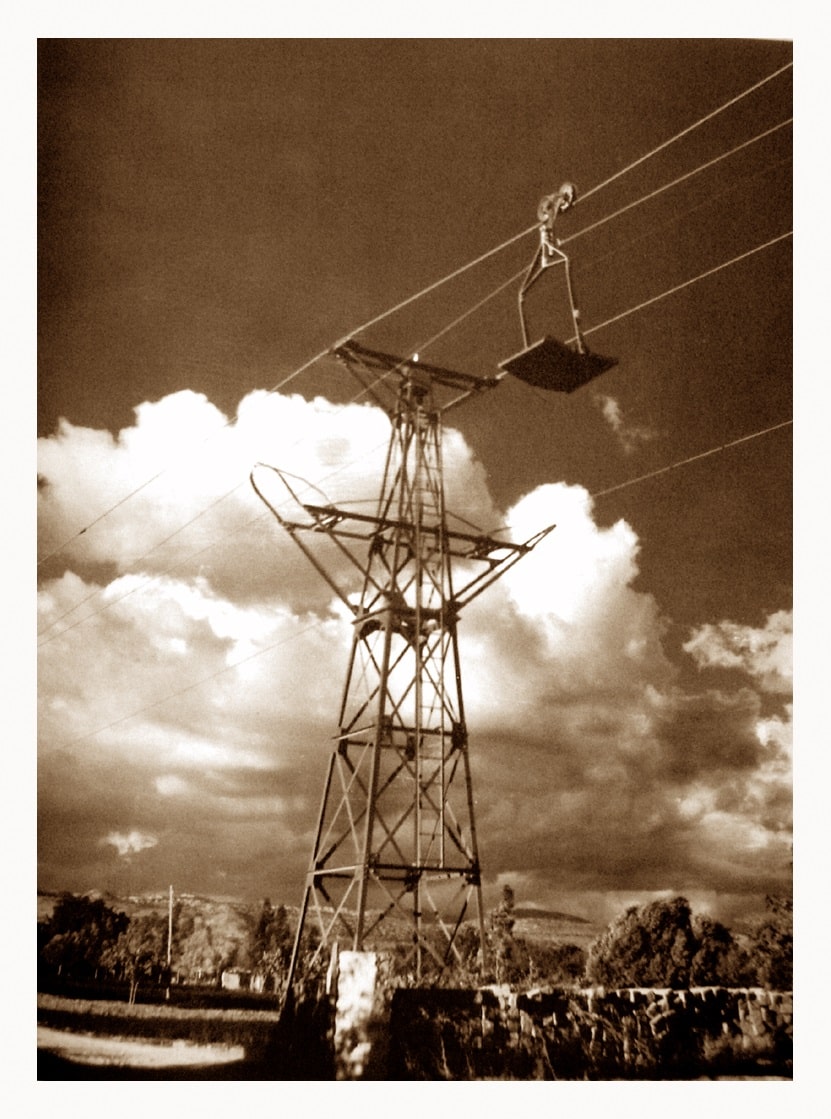
The cableway stretched roughly 35 kilometres between Pano Amiantos and Limassol. Published accounts vary slightly on its length and opening date, but agree on its purpose: transporting the mine’s asbestos to the coast.
According to the Cyprus encyclopaedia Polignosi, the route included stations at Agios Mamas and Spitali, and the journey took around two hours. A diesel engine drove the system, moving loaded wagons along the cables.
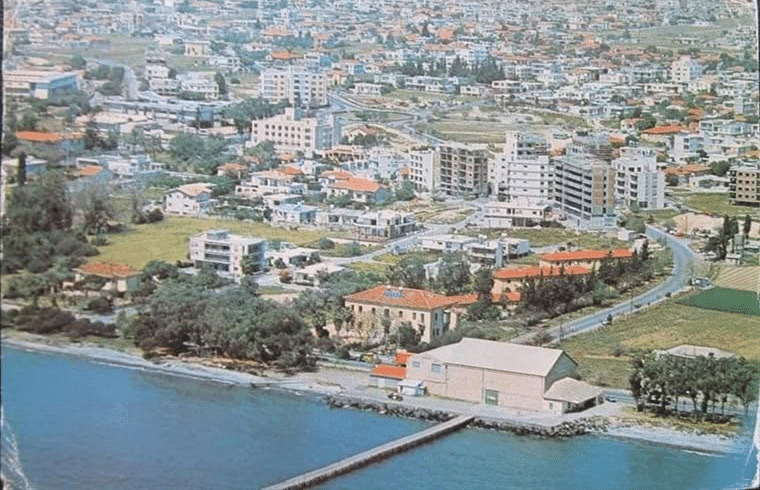
At Enaerios, the cargo reached coastal warehouses. The pier served as the loading point, with barges carrying asbestos out to ships for export. This was a working waterfront, built around the movement of goods from the mountains to overseas markets.
Did people really hitch rides on the cableway?
One of the most striking stories concerns people travelling alongside the cargo. Polignosi recounts people hanging from the aerial cables to reach Limassol, sometimes suffering serious injuries.
These accounts belong to the human history of the route. The cableway was an industrial transport system, never a passenger service.
Why did the cableway stop operating?
Around 1943, better road connections and the arrival of lorries made the cableway less economical. Road transport took over, and the aerial system was later dismantled.
The mine itself continued operating for decades. It closed in 1988, following falling demand and prices as international opposition to asbestos use grew. The end of the cableway and the closure of the mine were two separate events, more than forty years apart.
The Kanika complex and a new chapter for Enaerios
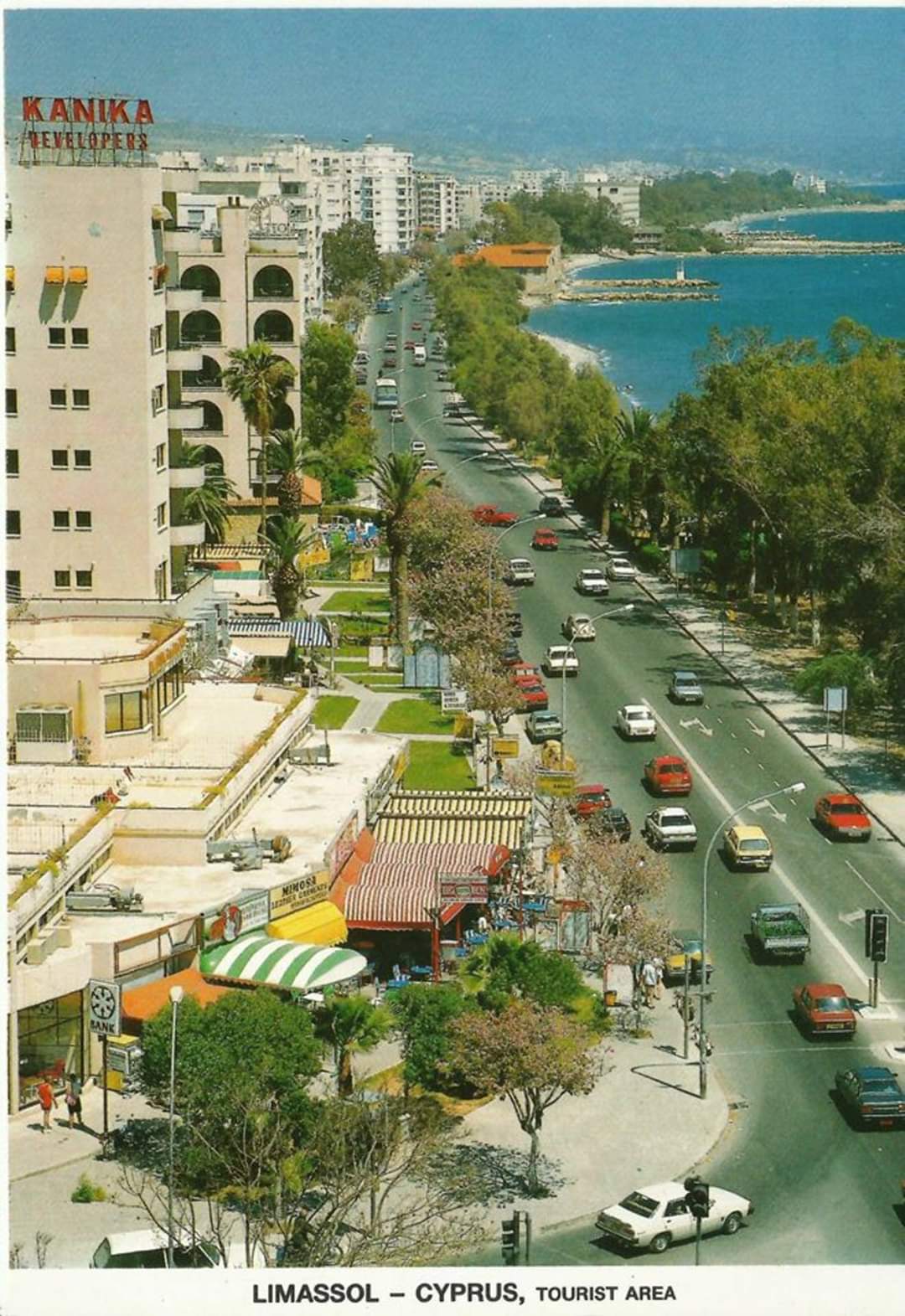
The 1980s brought a different kind of activity to the area. Kanika’s company history records 1980 as the milestone year for the construction of the Kanika Enaerios Complex.
The development included 750 apartments, alongside shops, offices and a hotel — one of {Best Areas to Buy in Limassol}’s established residential pockets today. Kanika describes it as one of the largest construction projects undertaken in Cyprus. Its mix of homes, businesses and visitor accommodation marked a new chapter in the area’s development.
Enaerios Pier: from loading point to seaside landmark
In 1995, Enaerios Pier was restored, giving the former industrial structure a new purpose as a place to walk and enjoy the sea — the same shift from working waterfront to public space that reshaped {Molos} a few decades later, further along the same coastline.
Today, the surrounding area brings together cafés, places to eat and space to spend time by the water. Enaerios Beach forms part of Akti Olympion Beach, beside pedestrian and cycle paths — part of daily life for anyone {Living in Limassol} today.
Next time you pass the pier, picture the suspended wagons arriving from Troodos. The machinery has gone, but the name still tells the story of the connection between mountain and sea.
Frequently asked questions about Enaerios, Limassol
Where is Enaerios in Limassol?
Enaerios is a seafront area in Limassol, Cyprus, centred around its historic pier. Its beach forms part of Akti Olympion Beach, beside the coastal walking and cycling paths.
Why is the area called Enaerios?
The name means “aerial” in Greek. It comes from the overhead cableway that once carried asbestos from Amiantos in the Troodos Mountains to Limassol’s coast.
What was Enaerios Pier originally used for?
The pier was used to load asbestos arriving from Amiantos onto barges for transfer to ships. It was part of the mine’s export infrastructure.
How long was the Amiantos-Limassol cableway?
It was approximately 35 kilometres long. Published estimates vary: Reporter gives 30-35 kilometres, while Polignosi gives around 36 kilometres and a journey time of about two hours.
When did the Enaerios cableway start operating?
Sources give different dates. Polignosi records 1921, while the Centre of Visual Arts and Research records installation in 1916 and operation beginning in 1924. It is safest to describe it as operating during the 1920s without claiming a settled opening year.
When did the cableway and Amiantos mine close?
The cableway stopped operating around 1943 as road transport took over. Amiantos mine remained active until 1988.
When was Enaerios Pier restored?
Enaerios Pier was restored in 1995. The former loading pier became a seaside walkway and a reminder of the area’s industrial past.
What is the Kanika Enaerios Complex?
It is a development of 750 apartments, shops, offices and a hotel, associated with the area’s growth in the 1980s. Kanika’s timeline places its construction milestone in 1980.